What Is Fire Power Products for Q4 2026 Fleet Buyers
October 19, 2026
Why fleet buyers should care what Fire Power Products actually is before the next procurement cycle closes
If you are sorting through fleet quotes and the numbers are making your head ache, you are not alone. Procurement gets messy fast. The hardest part is not finding equipment; it is finding equipment that still earns its place after abuse, cleanup, and repeated use. Fire Power Products sits in that exact conversation because fleet buyers need more than a shiny catalog claim. They need gear that supports real public safety work.
The phrase fire safety equipment sounds broad until you are the one matching it to apparatus use, command vehicle gear, and day-to-day maintenance, which is where U.S. Census business data can help frame the broader market context. That is where Fire Power Products belong in the discussion. According to the company’s public description, Duraline’s Fire Power products are engineered in the USA for demanding conditions and repeated high-use environments. That tells you the category, but not every spec. So you should treat them as mission-critical gear candidates, not a blanket answer for every purchase.
The kind of emergency vehicle gear that belongs in a fleet discussion and the kind that does not
Not every item with a rugged label belongs in the same buying bucket. Some products are cosmetic accessories. Others affect uptime, electrical integrity, and response readiness. Fleet buyers should focus on emergency vehicle gear that directly supports operation, maintenance, or safety. That includes cabling, connectors, receptacles, and related components that stay in service under stress. Decorative add-ons do not belong in the same review.
Here is the part most buyers miss. A product can look tough and still fail the real test. Real fleet selection asks one question first: what problem does this item solve on the apparatus? If the answer is vague, keep moving. If the answer is tied to uptime, cleanup, or repeat use, then you are in the right lane. That is why Fire Power Products for Q4 2026 fleet procurement matters as a planning lens.
What Duraline Fire Power products are designed to solve in high-use public safety environments
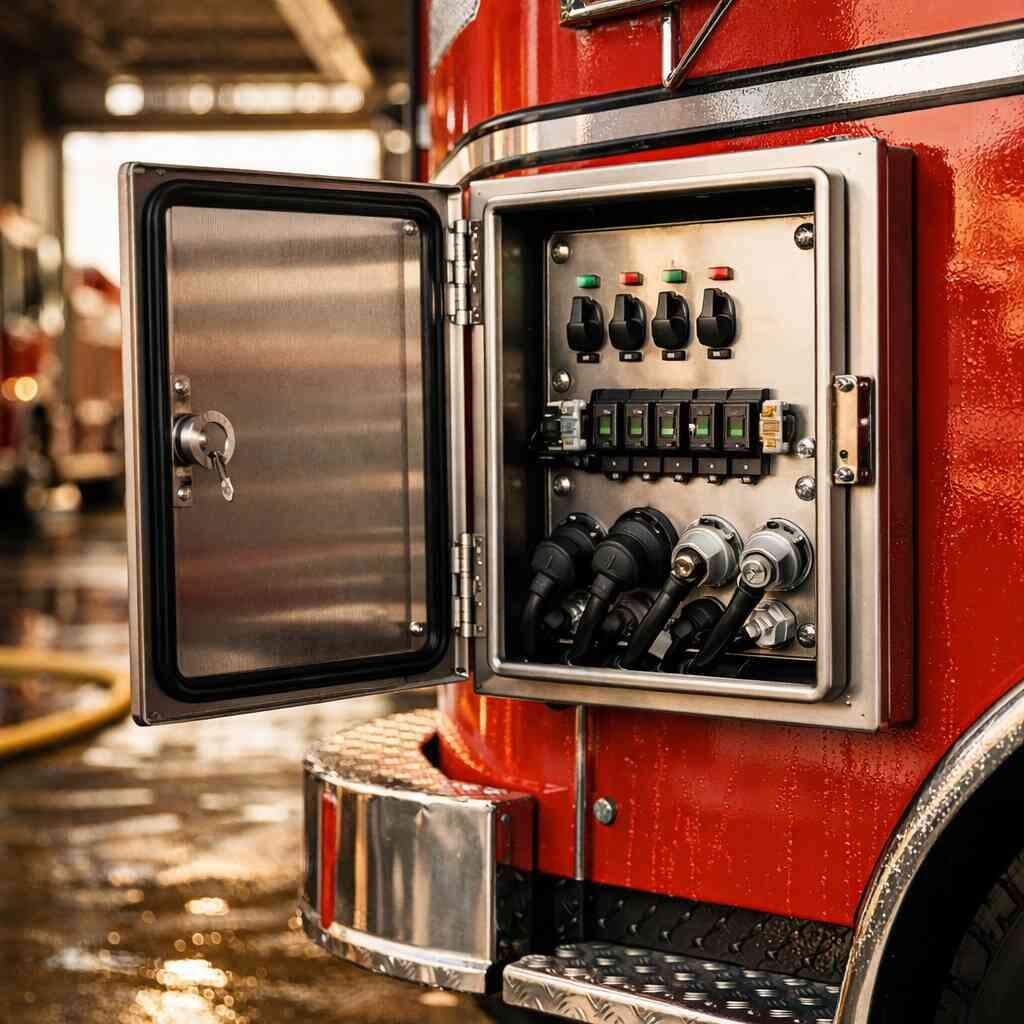
Public safety fleets do not live easy lives. Equipment gets handled in gloves, in rain, in heat, and after long shifts. It also gets washed down, often. That is the environment Fire Power products appear to be built around, based on the company description and broader product positioning. The real problem is not appearance. It is survivability through repetition.
We hear this from clients almost every week. A vehicle is technically ready, but a connector fails after cleaning or a cabling point becomes the weak link. That kind of failure creates a chain reaction. Downtime rises. Repair time stretches. Confidence drops. If you buy for a fleet, you know that feeling. The wrong part can waste a whole service day.
Why rugged fleet solutions matter more when equipment has to keep working after repeated hose-downs and hard duty
Ruggedness matters because cleaning is not optional in public safety. The gear has to tolerate hose-downs, grime, vibration, and hard handling without becoming fragile. In that sense, rugged fleet solutions are about endurance, not marketing language. You are buying for the day after the incident, not just the moment of installation. That is a subtle but important distinction.
One municipal buyer I spoke with described a frustrating pattern. A truck would return ready, get cleaned, and then a connection issue would show up three shifts later. The fix was not dramatic. It was better component selection and a stricter review of exposure points. That is where hose-down resistant equipment for public safety fleets starts to make financial sense. It reduces the hidden cost of failure.
What a DeLand Florida fire equipment supplier is really offering when the job demands mission-critical gear
A DeLand Florida supplier is not just selling parts. It is offering a procurement path for fire service supplies that may support apparatus, command vehicles, and response equipment. That matters because local buyers often need quick coordination, dependable communication, and enough product clarity to avoid mistakes. Fire Power Products, based in DeLand, Florida, fits into that conversation as a source of USA-engineered fire products for demanding use. The location matters, but only if the product meets the operational envelope.
Fleet teams in central Florida already know the weather reality. Heat, humidity, and sudden downpours are not theoretical. They are daily conditions. So when buyers look at a DeLand Florida fire equipment supplier, they are not just buying convenience. They are buying access to gear that should make sense in a tough operating climate. If you need a starting point, the company’s public contact path is the safest place to confirm fit and availability, rather than guessing from a brochure.
How Fire Power Products fit into fire service supplies and emergency response fleet needs
Fire Power Products appear to sit in the equipment layer that supports readiness rather than headline-visible apparatus components. That makes them relevant to emergency response fleet needs because the smallest weak point can affect the larger system. A fleet does not run on one heroic product. It runs on a network of parts that all need to work. That is why procurement should examine the role each item plays.
On the projects we have finished this year, the buyers who asked the right questions made better choices. They asked where the part lives, how often it gets touched, and what environment it sees. That sounds basic. It is not. It is the difference between buying trusted fire protection products and buying shelf stock that never earns deployment. If a product is part of a wider apparatus readiness plan, it deserves a deeper review.
Where IP68 connectors and pigtails may belong in a broader apparatus readiness strategy
IP68 is a specification term, not a magic guarantee. It generally signals strong ingress protection, but you still need to confirm the exact product, configuration, and installation context. In fleet work, IP68 connector pigtails for apparatus readiness may belong where exposure, washdown, and connection stability matter. They are not a cure-all. They are one piece of a larger readiness strategy.
A quick comparison helps.
Selection factorWhy it mattersWhat to verifyConnector sealingHelps limit contamination exposureExact rating and installed configurationWire routingAffects wear and service accessBend radius and mounting pathExposure conditionsDetermines real-world durabilityWashdown, heat, and vibration profileMaintenance accessShortens repair timeReplacement path and part availabilityIf you are comparing options, keep the focus on the application. That is where NEMA and IP68 cabling comparison for fleet selection can help frame the conversation without forcing a premature decision.
The difference between durable fire equipment and gear that only looks ready on paper
This is the trap that catches even experienced buyers. A piece of durable fire equipment can look impressive in a quote and still fail in installation. The paper version is always neat. The field version is messier. Heat, movement, connector strain, and maintenance access expose weaknesses that spec sheets rarely make obvious. That is why fleet buyers need more than a product name.
A command vehicle manager once told us that the prettiest quote caused the most problems. The listing looked complete, but the integration details were thin. The team spent more time adapting the part than using it. That is exactly how expensive shelf stock happens. If the gear does not match the work, it is not readiness. It is inventory.
What fleet purchasing teams should confirm before assuming a product matches their operational envelope
Before you commit, verify the basics. Not because buyers are inexperienced, but because assumptions get costly. The product must fit the vehicle, the duty cycle, and the maintenance plan. It should also support the electrical system without creating hidden risk. If those pieces are unclear, pause.
Use this short checklist:
- Confirm the exact application and mounting point.
- Verify environmental exposure, including washdown and heat.
- Ask about integration with existing apparatus systems.
- Check repair access and replacement procedures.
- Request the specific product configuration, not a generic label.
- Make sure the installation plan matches the vehicle’s wiring and space constraints.
That is how you avoid buying reliable fire equipment for emergency response fleet needs that only works in theory. The goal is simple. You want equipment that earns its place on the apparatus, not just on the invoice.
The procurement decisions that separate reliable fire equipment from expensive shelf stock
Procurement is where good intentions get tested. You can want fire safety equipment that lasts, but if the selection process is thin, you may still end up with parts that create follow-up work. The teams that do this well think in systems. They look at compatibility, serviceability, and lifecycle cost together. That is the real difference between a smart purchase and expensive shelf stock.
The mistake we see most often is first-cost tunnel vision. A lower price can look attractive until repair calls start adding up. Fleet buyers in public safety cannot afford that kind of false savings. A part that fails twice is not cheaper. It is louder. It steals time from your crew and attention from your operations manager.
Which command vehicle equipment and apparatus systems deserve the most scrutiny during selection
Some systems deserve extra attention because they directly affect uptime. Command vehicle equipment and apparatus electrical pathways sit near the top of that list. If a part supports power delivery, charging, communication, or connection integrity, inspect it closely. These are not luxury components. They are operational dependencies. Treat them that way. That scrutiny should extend to the part’s environment. Ask where it lives, how often it gets cleaned, and what vibration it sees. Ask who will service it and how fast replacement can happen. That is especially important for fire engine operations and apparatus systems that rely on consistent power and clean routing. A missed detail here can ripple through the whole fleet. ### How commercial fleet procurement teams should think about equipment lifecycle value instead of only first cost
Commercial fleet procurement works best when it treats equipment as a long-term asset, especially as U.S. Bureau of Labor Statistics data often informs labor and cost assumptions behind those decisions. First cost is only one line item. Downtime, repair labor, replacement frequency, and operational disruption matter just as much. That is why equipment lifecycle value should shape the buying decision. A durable part that holds up over repeated use often costs less in the end.
Here is the simple frame:
- Estimate service life under actual duty.
- Compare repair frequency, not just purchase price.
- Factor downtime into the cost.
- Include training and maintenance access.
- Review whether the part supports future system changes.
That approach turns a purchase into a policy, which is what good fleet teams need. It is also where commercial fleet procurement for fire safety equipment becomes more than a search phrase. It becomes a discipline.
Why maintenance-conscious gear matters when uptime and repair access affect response readiness
Maintenance matters because every minute spent troubleshooting is a minute spent off mission. Maintenance-conscious gear reduces friction when crews need to inspect, replace, or clean a component. That is especially valuable in fleet environments where multiple people touch the same vehicle. Simpler service access can save real hours over time. The value is practical, not theoretical.
Think about the reality of a shift change. A vehicle comes in dirty, gets rinsed, and returns to service quickly. If a component is hard to reach or impossible to inspect, small issues linger. Those small issues become failure points later. That is why operational resilience starts with serviceability, not just toughness.
What to verify about product fitment compatibility and electrical system integration before ordering
Before ordering, confirm fitment at the vehicle level and the system level. A product can be durable and still be wrong for your apparatus layout. Check dimensions, connector style, routing, and any interface requirements. Then verify that the electrical system can support the part without strain. That is the difference between a clean install and a recurring service issue.
You should also ask a few blunt questions:
- Does the part match the specific vehicle model or apparatus bay?
- Is the connection method compatible with current hardware?
- What documentation exists for installation?
- Can your maintenance team access it without major disassembly?
- Does the supplier confirm the exact configuration in writing?
If you want a local place to start that conversation, the company’s contact path is the right move. A DeLand Florida fire equipment supplier for fleet buyers should be able to help clarify fitment questions before purchase, not after.
The next move for Q4 fleet buyers who need dependable American-made fire safety solutions
The final buying decision should be simple enough to defend and strong enough to survive scrutiny. That is the goal. You want American-made fire safety solutions that align with your fleet reality, not a fantasy version of it. If the product supports repeated use, clean installation, and real service access, you are closer to the right answer. If not, keep looking.
For buyers who are balancing budgets, response expectations, and vehicle downtime, clarity beats speed. You do not have to figure this out alone, and you do not have to figure it all out today. Start with the questions that expose risk. Then narrow the list with confidence. That is how you build a durable fleet, not just a busy purchasing file.
How to narrow a buying list around frontline durability and operational resilience without overbuying
Start with the use case. Then cut everything that does not support it. That is the cleanest way to avoid overbuying. Frontline durability should drive the shortlist, not brand noise or flashy packaging. If the part will not survive your daily reality, remove it.
A practical filter looks like this:
- Supports direct operational use.
- Matches the vehicle’s environment.
- Has clear service or replacement access.
- Fits the current apparatus setup.
- Offers documentation strong enough for procurement review.
If you keep that standard tight, you will buy fewer parts and better ones. That is the essence of high-use equipment selection. It is disciplined, and it protects your budget.
What information to gather from Fire Power Products or Contact Duraline before issuing a final purchase decision
Before you issue the final purchase decision, gather the details that matter. Ask for the exact configuration, the recommended application, and any installation guidance available. Ask what products are best aligned with your vehicle class and duty cycle. Also ask how the supplier defines the product’s intended use. Those answers matter more than broad claims.
The most useful items to request are:
- Product configuration details.
- Installation and fitment guidance.
- Maintenance or service notes.
- Confirmation of intended use.
- Availability and ordering path.
That is where direct communication helps. A short call can prevent a long problem. If you want to begin with durable fire equipment for DeLand buyers in Florida, keep the conversation focused on fit, use, and serviceability.
How to align rugged fleet solutions with long-term public safety fleet purchasing goals
Long-term purchasing goals should protect readiness. They should also protect the people who depend on the fleet. That means choosing rugged fleet solutions that fit your maintenance culture and your response profile. If a product adds complexity without adding resilience, it is the wrong answer. Simplicity often wins, especially when crews are busy.
One county-level buyer told us they changed their process after a string of preventable service delays. They started weighting serviceability and lifecycle value higher than a lower line-item price. The result was fewer surprises and better uptime. That is not glamorous, but it is real. And real is what public safety fleets need.
The decision frame that helps buyers choose equipment built for demanding conditions and future readiness
Use a three-part frame. First, does it fit the job? Second, does it survive the environment? Third, can you maintain it without wasting time? If the answer is yes to all three, you are close to a sound decision. If one answer is shaky, keep questioning.
That frame protects future readiness because it anticipates change. Fleet equipment rarely lives in a static world. Vehicles age. Needs shift. Usage rises. So choose gear that can keep pace without creating more work than it solves. If you are ready to move, start one conversation today with Fire Power Products or Duraline, and ask for the exact product details tied to your apparatus needs. You do not need a perfect decision right now. You need the next right one.
Frequently Asked Questions
Question: What is Fire Power Products in the context of What Is Fire Power Products for Q4 2026 Fleet Buyers, and how does it fit into commercial fleet procurement for public safety fleets?
Answer: Fire Power Products is positioned as a source of USA-engineered fire products and fire safety equipment for demanding public safety environments. For fleet buyers, that means the focus is not on cosmetic add-ons, but on gear that supports apparatus readiness, emergency vehicle gear needs, and long-term operational resilience. The most relevant products are the ones that help maintain uptime, support safe electrical or equipment integration, and hold up in high-use conditions. Because fleet purchasing decisions should be based on fit, durability, and serviceability, Fire Power Products belongs in the conversation when buyers need mission-critical gear that can support emergency response fleet needs without creating unnecessary maintenance issues.
Question: How can fleet buyers evaluate whether Fire Power Products offers durable fire equipment that matches their apparatus readiness and equipment reliability standards?
Answer: Fleet buyers should evaluate Fire Power Products the same way they would evaluate any durable fire equipment: by confirming the exact application, installation environment, and maintenance requirements. The key question is whether the part or component supports the vehicle’s real duty cycle, not just whether it looks rugged on paper. Buyers should verify fitment compatibility, exposure to washdown or heat, service access, and how the product integrates with existing apparatus systems. If those points are clear, then the equipment is more likely to support equipment durability and operational resilience. Fire Power Products is most useful when the buyer needs maintenance-conscious gear that can withstand repeated use and support frontline durability in demanding conditions.
Question: Does Fire Power Products offer hose-down resistant equipment for public safety fleets, and what should buyers verify before ordering?
Answer: The company description indicates that Fire Power Products is designed to withstand demanding conditions, including high-pressure hose-downs, but buyers should always verify the exact product specifications before ordering. That means checking the specific configuration, ingress protection claims if applicable, installation guidance, and whether the item is suitable for the intended environment. A hose-down resistant equipment claim only matters if it matches the actual application and mounting setup. Fleet buyers should also confirm compatibility with the vehicle’s electrical system and make sure the product supports reliable fire equipment performance after routine cleaning. In short, Fire Power Products may be a strong fit for tough-environment equipment needs, but the final decision should be based on the exact product details and documented fitment.
Question: What should public safety fleet purchasing teams ask Fire Power Products before making a final fleet purchasing decision?
Answer: Public safety fleet purchasing teams should ask for the exact product configuration, intended use, installation notes, and any available fitment guidance for the specific vehicle or apparatus. They should also ask how the product supports maintenance-conscious gear standards, what service access looks like, and whether the item is meant for command vehicle equipment, apparatus systems, or other emergency response tools. If the goal is reliable fire equipment, the buyer should confirm compatibility with current hardware, wiring, and mounting constraints before committing. These questions help teams compare equipment lifecycle value instead of focusing only on first cost. A strong final fleet purchasing decision should be based on practical use, ease of maintenance, and confidence that the product can perform in demanding conditions.
Question: Why do fleet buyers consider Fire Power Products a relevant option for emergency vehicle gear and fire service supplies in DeLand, Florida?
Answer: Fleet buyers may consider Fire Power Products relevant because it is based in DeLand, Florida and is described as offering USA-engineered fire products for demanding public safety use. That makes it a logical option for buyers looking for fire service supplies that may support apparatus readiness, emergency response fleet needs, and durable fire equipment selection. The local DeLand, Florida fire equipment supplier context can also be helpful for buyers who want direct communication and a clearer path to product clarification before purchase. For fleet teams, that combination matters because the best procurement outcomes usually come from suppliers who can help confirm fit, intended use, and maintenance implications before the order is placed. Fire Power Products is therefore a useful name to evaluate when the goal is trusted fire protection products built around real-world use rather than marketing claims.
Question: How does Fire Power Products support frontline durability and equipment lifecycle value for high-use equipment in emergency response fleet needs?
Answer: Fire Power Products supports frontline durability by focusing on gear intended for repeated, high-use conditions rather than short-term convenience. For fleet buyers, that matters because equipment lifecycle value depends on more than purchase price. It depends on how often the item needs service, how easily it can be maintained, and whether it continues to perform after repeated exposure to harsh conditions. When buyers choose high-use equipment that is designed for tough-environment equipment demands, they reduce downtime and protect response readiness. That is why Fire Power Products can be a strong fit for procurement for safety fleets: it helps buyers think beyond shelf stock and toward equipment that supports long-term operational resilience, mission-critical gear needs, and dependable performance in demanding conditions.