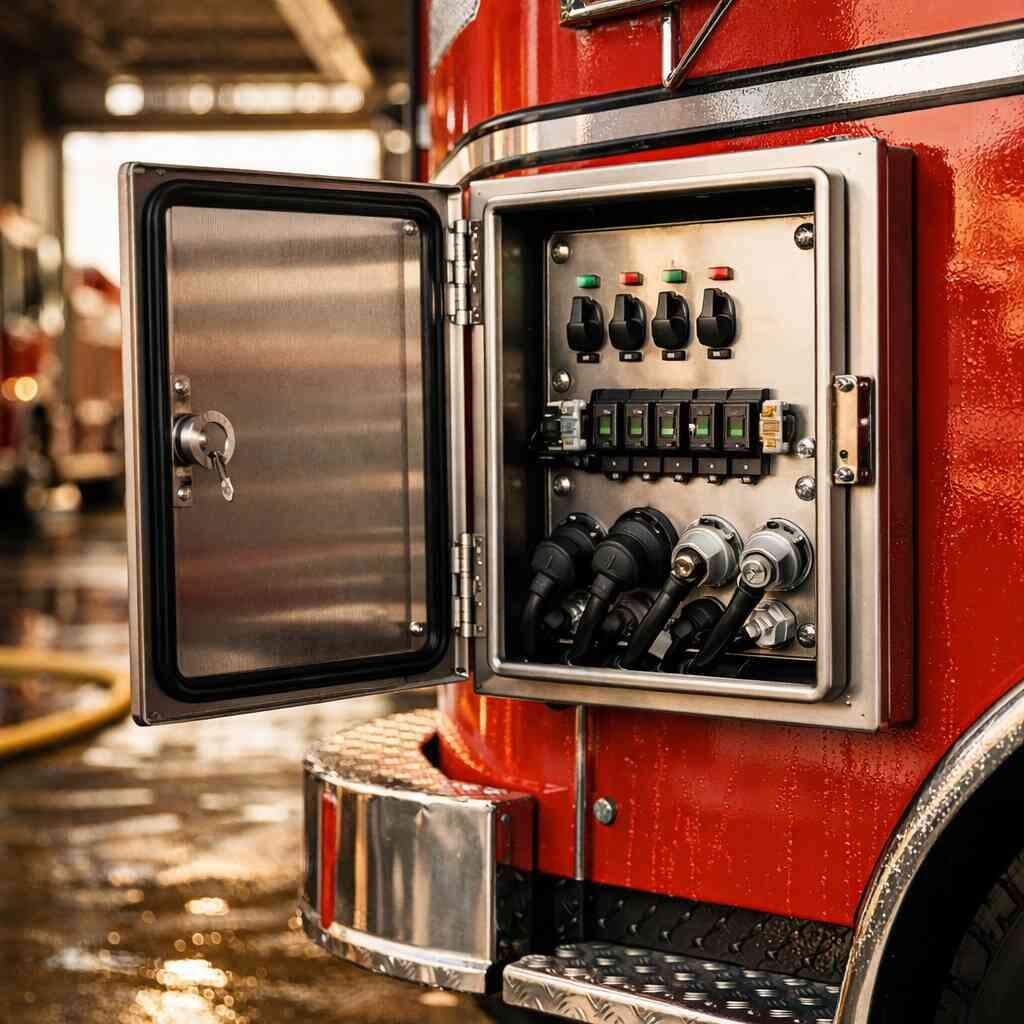
How Fire Power Products Support Columbus Day Fleet Planning 2026
October 17, 2026
When Columbus Day call volume rises, what actually breaks in a fire fleet
Call volume changes fast, and fleet problems change faster. If you are staring at a packed calendar and a nervous maintenance board, that feeling makes sense. The hard part is not the extra work alone. It is finding the weak link before it turns into downtime. In Columbus Day fleet planning, apparatus uptime planning is really about spotting small failures early enough to matter.
Why seasonal fleet pressure exposes weak links in apparatus uptime planning
Seasonal fleet pressure rarely starts with a dramatic failure. It starts with a connector that loosens, a cable that frays, or a unit that gets swapped “next week.” Then next week becomes next quarter. That is how fire apparatus fleet readiness slips. During fall fleet preparation for fire departments, pressure exposes every shortcut you took in spring.
What we have seen in 2026 specifically is simple: vehicles that look fine on paper can still be one rinse cycle away from trouble. High-usage equipment reliability depends on details most people never see. The first items to fail are often the smallest, including electrical connections, mounting points, and components that live near water, grime, and vibration.
The hidden cost of deferred maintenance in emergency vehicle maintenance planning
Deferred maintenance feels efficient until it is not. You save a service slot today, then pay for a roadside delay tomorrow. That delay may not look expensive at first, but it ripples through emergency response readiness, overtime, and morale. In emergency vehicle maintenance planning, the real cost is often lost confidence.
We hear this from clients almost every week. They know the truck can still run, but they no longer trust it fully. That uncertainty changes everything. Drivers hesitate. Supervisors add extra checks. Crew members start asking where the spare is parked. One unit in a busy service rotation can disturb fleet continuity planning for the whole station.
Where high usage and hose-down exposure tend to punish rugged fire apparatus components
High-usage equipment reliability is not abstract. It is what survives after repeated deployment, rinse-downs, road spray, and heat cycling. On the projects we have finished this year, water exposure has been a bigger issue than many buyers expected. Hose-down resistant equipment matters because a fleet is rarely dry, clean, or idle. It lives in punishment.
Here is the part most readers miss: a component does not have to fail visibly to cause trouble. Corrosion starts quietly. A connector may still pass current while degrading internally. Then a routine call becomes a mystery failure. That is why rugged fire apparatus components belong in the same conversation as staffing and dispatch.
Why DeLand Florida fleet managers need dependable fire safety equipment that stays mission ready
DeLand Florida fleet support in Florida means planning for humidity, rain, and hard use at the same time. That mix is brutal on equipment performance in demanding conditions. It also makes mission-ready equipment less of a luxury and more of a baseline. If you are managing a regional fleet from DeLand, you already know that weather does not wait for your maintenance window.
A DeLand fleet manager once described it to us plainly: “Everything works until the first wet week.” That is the whole problem in one sentence. Dependable fire safety equipment reduces guesswork during those wet weeks. For teams juggling dispatch needs and preventive work, Columbus Day fleet planning for fire apparatus readiness in DeLand Florida should focus on continuity, not optimism.
The maintenance window that turns emergency response readiness into a planning discipline
A good maintenance window is not just open time on the calendar. It is a discipline. You use it to catch wear before it becomes failure. You also use it to make decisions while you still have choices. That is the difference between reacting to a breakdown and practicing emergency response readiness.
Building a fleet inspection checklist that catches failures before they become downtime
A fleet inspection checklist should do more than verify that the unit starts. It needs to test the points most likely to fail under seasonal stress. Think connectors, receptacles, harnesses, lighting circuits, and mounting hardware. A useful checklist is short enough to finish and detailed enough to matter. If it takes an hour to understand, it is too vague.
A simple inspection sequence can help:
- Check visible wear on cords, seals, and boots.
- Test all electrical connections under normal load.
- Inspect for moisture intrusion after washdown.
- Confirm secure mounting on vehicles and support rigs.
- Document repeat issues before they become patterns.
That list looks basic, but basics prevent downtime. The best maintenance scheduling for fleets is disciplined and repeatable. It should fit the realities of first responder fleet operations without slowing the station down. One missed fault can take a rig out for a shift. Two missed faults can take a crew off rhythm.
How fleet asset management supports apparatus continuity across trucks, engines, and support vehicles
Fleet asset management becomes useful when it shows relationships, not just inventory. A truck, engine, and support vehicle may share parts, wear patterns, or service dependencies. If one component type keeps failing across all three, that is not coincidence. It is a planning signal. Apparatus continuity depends on seeing those links early.
The mistake we see most often is treating each vehicle as isolated. In real fire department fleet logistics, they are connected. A problem in one unit can reveal a weak standard across the fleet. If you are using different replacement parts for similar jobs, you make diagnosis harder. You also make procurement slower, and that slows frontline readiness solutions.
When fleet replacement planning beats another round of repairs
There is a point where repairs stop being prudent. By then, fleet replacement planning may be the better financial decision. That does not mean replacing everything. It means asking whether the next repair restores real reliability or just buys time. You need honesty here, not enthusiasm. Here is a useful comparison: Decision factorAnother repairReplacement planningDowntime riskOften unpredictableMore controllableParts availabilityCan be unevenCan be standardizedLong-term costMay accumulate fastEasier to forecastOperational confidenceUsually temporaryOften strongerThat table does not tell you what to buy. It tells you how to think. If an asset keeps cycling through the same issue, replacement planning may protect mission-critical equipment support better than another repair. That is especially true when the unit sits in daily service.
Why equipment standardization simplifies public safety fleet support and maintenance scheduling for fleets
Equipment standardization is one of the cleanest ways to reduce friction. When parts match, training simplifies. When inventories align, troubleshooting speeds up. When crews know what to expect, fleet asset management improves. Standardization also helps public safety fleet support because it reduces surprise during procurement.
A mixed inventory feels flexible until it becomes confusing: different connectors, different cables, different adapters. Then maintenance scheduling for fleets turns into detective work. Standardized parts help the team swap faster and document better. They also support operational resilience by reducing the number of unique failure points. That matters in a busy station.
What Fire Power Products can add when the plan has to hold under pressure
Fire Power Products fits best where planning meets hard use. The brand’s value is not in hype. It is in durable equipment for public safety fleets that need consistency under pressure. Fire Power products are described by the company as USA engineered and built for demanding conditions. That matters, but only if the product also fits the workflow you already run.
Where Duraline Fire Power products fit into frontline readiness solutions without overpromising performance
Frontline readiness solutions work only when the gear matches the job. Fire Power products can support that goal without pretending to solve every fleet problem. The honest value is narrower and stronger. These products can help teams reinforce the equipment layer that keeps a vehicle usable. That is different from claiming they will fix staffing, weather, or neglect.
If you need mission-critical fire safety products for public safety fleet support, focus on fit and consistency first. That is where fire apparatus fleet readiness with rugged Duraline Fire Power products becomes relevant. The goal is not magic. The goal is dependable integration. In other words, equipment that belongs in the system and does not create new problems.
How IP68 connector pigtails, receptacles, extensions, and junction accessories can support fire apparatus fleet logistics
Fleet logistics gets easier when your connection points are predictable. IP68 connector pigtails, receptacles, extensions, and junction accessories are the kinds of items that can support that predictability. IP68 ratings indicate protection against dust and water ingress under defined testing conditions, which is why buyers often examine them closely. Still, you should verify the exact model details before procurement. Specifications matter.
A practical procurement list might include:
- IP68 female connector pigtails for emergency vehicle maintenance planning
- Junction receptacles and accessories for fire department fleet logistics
- IP68 male pigtails for dependable fire safety equipment uptime
- Male-female electrical extensions for seasonal fleet preparation
Those categories help streamline stocking and replacement decisions. They also make it easier to keep spare parts aligned with the fleet plan. If one station runs a slightly different configuration, that can slow repairs. Standardized electrical connector durability for firefighting equipment is a quiet advantage. It shows up most clearly on busy weeks.
Why USA engineered fire equipment matters when teams need durable equipment for public safety fleets
USA engineered fire equipment matters for more than branding. It often signals a tighter connection between design intent and field use. For teams managing public safety fleet support, that connection can simplify communication and reduce procurement confusion. It also gives buyers a clearer basis for comparing options. Clear information lowers risk.
That said, good buyers still ask hard questions. What is the exact application? Which connector fits the current build? What components belong in the spare kit? Those questions keep emergency services procurement grounded. If you need a starting point, mission-critical fire safety products for public safety fleet support can help you narrow the field without overcommitting too soon. The right choice is the one that matches your apparatus, your schedule, and your maintenance discipline.
The next move for Columbus Day operations planning and fall fleet preparation in DeLand Florida
The next move should be practical. Start with the vehicles that run the hardest routes and see the most washdown exposure. Then compare what they share, what fails repeatedly, and what can be standardized before the season tightens. That gives you a cleaner path for Columbus Day operations planning. It also supports fall fleet planning for fire departments without creating extra noise.
If your team is based in DeLand, keep the plan local and realistic. Weather, workload, and turnaround time all matter. One station supervisor told us the cleanest improvement came from a one-sheet checklist and a tighter spare-parts drawer. Not glamorous. Very effective. If you are ready to act, contact Duraline for emergency services procurement support and start with one unit, one checklist, and one call today. You do not have to solve everything at once.
Frequently Asked Questions
Question: How does How Fire Power Products Support Columbus Day Fleet Planning 2026 relate to fire apparatus fleet readiness and emergency vehicle maintenance planning in DeLand, Florida?
Answer: The blog focuses on a practical part of Columbus Day fleet planning: keeping apparatus ready before seasonal demand exposes weak points. For teams in DeLand, Florida, that means treating fire apparatus fleet readiness as a routine discipline, not a last-minute fix. Fire Power Products supports that approach by offering durable equipment for public safety fleets that can fit into existing emergency vehicle maintenance planning without forcing a complete overhaul. The goal is to help departments reduce surprises, strengthen apparatus uptime planning, and keep frontline readiness solutions aligned with real-world station demands.
Question: What kinds of rugged fire apparatus components and dependable fire safety equipment should departments review during seasonal fleet preparation?
Answer: During seasonal fleet preparation, departments should review the components most likely to fail under heavy use, washdown exposure, and vibration. That usually includes electrical connectors, receptacles, harnesses, mounting points, and accessories that support daily deployment. Fire Power Products is positioned around rugged fire apparatus components and dependable fire safety equipment that can help teams improve high-usage equipment reliability. The safest approach is to verify exact specifications before procurement, especially for items like IP68 connector pigtails, receptacles, extensions, and junction accessories. When fleets standardize these parts, maintenance gets simpler and equipment performance in demanding conditions becomes easier to manage.
Question: How can Fire Power Products help with fleet inspection checklist planning and maintenance scheduling for fleets?
Answer: A strong fleet inspection checklist should look beyond whether a vehicle starts. It should focus on the failure points that affect operational resilience, such as connectors, seals, boots, load performance, and moisture intrusion after washdown. Fire Power Products can support that process by supplying components that fit into a repeatable maintenance scheduling for fleets strategy. The value is in consistency: when your spare parts, replacement connectors, and accessory choices are standardized, inspections become faster and repeatable. That helps first responder fleet operations stay organized, supports fleet continuity planning, and gives supervisors a cleaner way to spot problems before they become downtime.
Question: Why does equipment standardization matter for fire department fleet logistics and fleet replacement planning?
Answer: Equipment standardization matters because mixed parts create confusion, slow repairs, and make diagnostics harder across the fleet. For fire department fleet logistics, standard parts mean fewer surprises, easier stocking, and faster response when a unit needs service. It also helps fleet replacement planning by making it easier to compare repair costs against the value of restoring confidence in the asset. Fire Power Products supports this model by offering mission-critical equipment support that can align with a department’s existing setup. When the same general connection types and accessory families are used across trucks, engines, and support vehicles, procurement becomes more efficient and long-term planning becomes clearer.
Question: What should departments know before choosing American-made fire safety products or USA engineered fire equipment from Fire Power Products?
Answer: Departments should start by matching the product to the exact application instead of assuming any component will fit every apparatus. American-made fire safety products and USA engineered fire equipment can be a strong option when the design intent matches the fleet’s needs, but buyers should always verify specifications, compatibility, and installation requirements. Fire Power Products emphasizes durability and performance in demanding conditions, but responsible procurement still means reviewing the vehicle build, the duty cycle, and the maintenance plan. That approach helps public safety fleet support stay grounded in facts, not assumptions, and it reduces the risk of buying parts that do not fit the workflow.
Question: How can Fire Power Products support Columbus Day operations planning and fall fleet planning for fire departments without overpromising performance?
Answer: The most reliable support is the kind that improves consistency without claiming to solve every fleet challenge. For Columbus Day operations planning and fall fleet planning for fire departments, Fire Power Products can help by supplying durable equipment for public safety fleets that is designed to fit into a department’s broader maintenance and procurement routine. That includes helping teams think through spare parts, replacement priorities, and equipment standardization so the station can move faster when demand rises. The brand message is strongest when it stays practical: support the fleet, reduce avoidable failure points, and help crews stay mission ready. For departments in DeLand, Florida, that kind of straightforward approach is often the most useful one.