Ultimate Guide to Fire Truck Cabling for Thanksgiving Prep 2026
October 18, 2026
Why a perfectly running fire truck can still fail the holiday readiness test
A truck can look ready and still let you down. The engine starts cleanly. The lights flash. The pump checks out. Then a hose-down, a rough call, or one more added load exposes a weak wire, and the whole holiday plan starts wobbling. If you are reading this with that uneasy feeling in the back of your mind, you are not alone. We hear that from crews every season.
The hidden cabling issues that show up after routine washdowns and high-use calls
Washdowns are supposed to protect the apparatus. Instead, they sometimes push moisture into places that were already marginal. A nicked jacket, a loose receptacle, or a tired clamp can turn into a slow electrical problem that hides until you need the truck most. That is why fire truck cabling for Thanksgiving readiness in 2026 deserves real attention before travel coverage and event response ramp up.
On the projects we have finished this year, the pattern has been familiar. The truck passes the quick visual check, but the problem sits behind a panel or inside a compartment bend. One crew in central Florida found intermittent radio power only after repeated rinse cycles. The fix was not dramatic. It was careful tracing, cleaner routing, and replacing a fatigued connector before it became an out-of-service issue.
Why seasonal fleet maintenance exposes weak points in emergency vehicle wiring
Seasonal fleet maintenance tends to surface problems because every system gets used at once. Radios, chargers, scene lighting, onboard electronics, and battery support all ask for current at the same time. That is when marginal emergency vehicle wiring shows its age. A wire that survived routine weekday use may fail under a fuller holiday workload.
The hard part is that the failure often looks unrelated. A flickering light may point to grounding, but the root cause could be a stretched harness or poor support at a junction. In our experience, the biggest mistake is treating electrical concerns as isolated symptoms. They are often connected through the same harness path, the same load point, or the same corroded termination.
The warning signs of abrasion corrosion and connector fatigue before they become downtime
You do not need a meter for every warning sign. You need a disciplined eye and a consistent process. Abrasion usually leaves shiny jacket wear, dust trails, or a spot where a harness moves more than it should. Corrosion shows up as discoloration, green residue, or terminals that feel looser than they should. Connector fatigue often appears as heat marks, intermittent contact, or a plug that no longer seats with confidence.
Here is the part most crews miss. The first failure is rarely total failure. It is usually a small annoyance that gets ignored because the truck still runs. That is why seasonal fleet maintenance for fire trucks before Thanksgiving travel coverage should include a real cabling review, not just fluid checks and tire pressure. Catching early wear is how you protect response time.
What every apparatus bay should check before Thanksgiving travel and event coverage
The apparatus bay is where prevention either happens or gets postponed. You do not need a giant overhaul to make progress. You need a focused station readiness checklist, a few simple test steps, and the discipline to follow the wire paths all the way to the load. That is especially important when holiday coverage adds longer shifts, more driving, and more stop-and-start electrical demand.
Building a cabling inspection checklist that catches loose routing damaged insulation and worn clamps
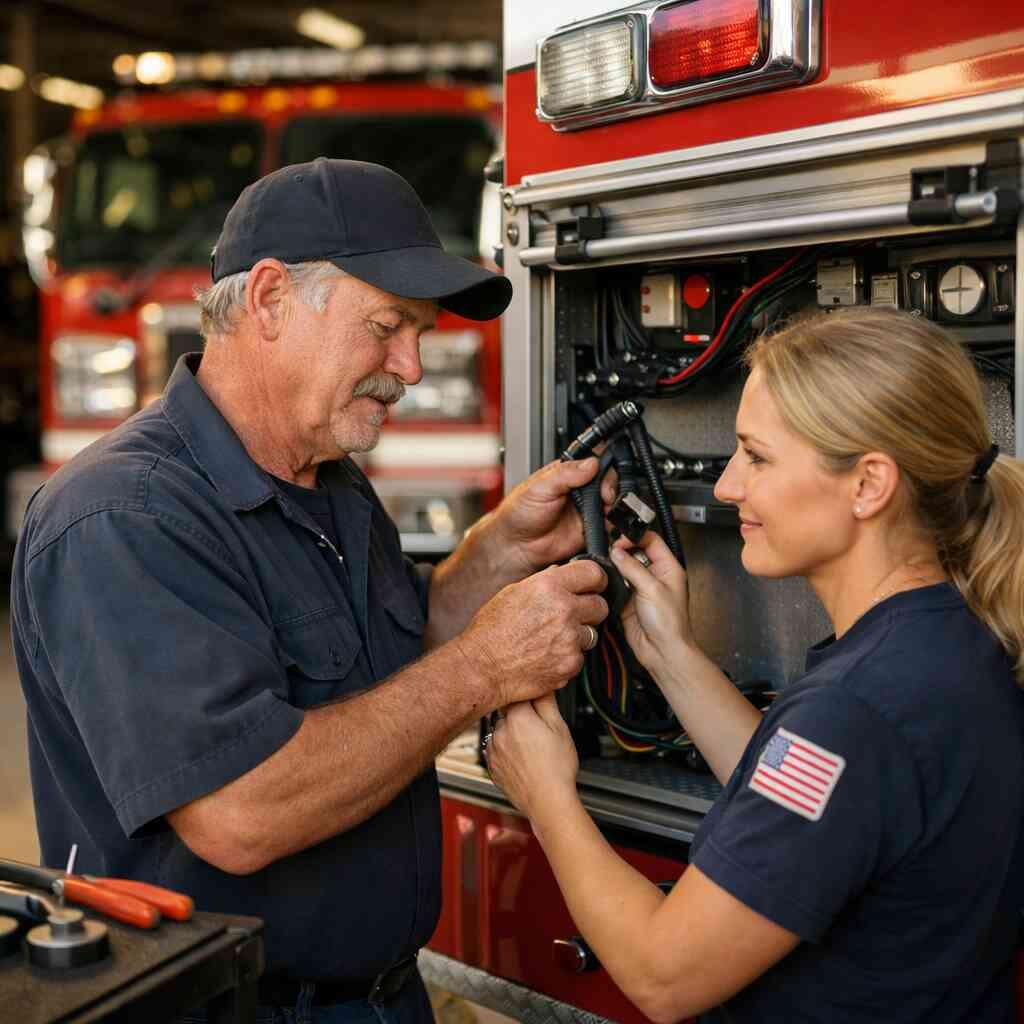
Start with the physical run. Look for loose routing, flattened sections, cracked insulation, and clamps that no longer hold the cable off metal edges. Check door pinch points, compartment corners, and any place a harness crosses a hinge or bracket. A good fire apparatus wiring inspection checklist before the holiday season should make these items impossible to skip.
A practical checklist is simple enough to use under pressure:
- Inspect every visible harness for abrasion.
- Verify clamps and clips are tight.
- Confirm insulation is intact at bends.
- Check for heat exposure near exhaust-adjacent zones.
- Look for any connector that twists under light hand pressure.
That list sounds basic, and that is exactly the point. Basic checks catch expensive problems.
How to verify emergency lighting circuits battery and power distribution without chasing phantom faults
Electrical troubleshooting gets frustrating fast when a symptom keeps moving. A light fails, then works again. A radio resets, then behaves normally. That is how phantom faults waste time. The better approach is to verify each emergency lighting circuits path, battery support, and distribution point in a calm sequence.
Test the system under load, not just at idle. Measure voltage where the load actually lands. Then move backward through the circuit until the drop disappears. If a battery and power distribution issue shows up only when multiple accessories run together, you likely have a connection problem, not a battery problem. That distinction saves hours.
Where compartment wiring organization breaks down when radios chargers and auxiliary loads all come online
Compartment wiring often breaks down at the edges. A charger gets added. Then a radio mount changes. Then another auxiliary load comes online. Pretty soon, the compartment has too many branches, too little support, and no clear wire management in fire trucks. That is when noise, heat, and routing overlap create avoidable failures.
One department we spoke with had a small but maddening issue. The truck rebooted every time two chargers and a fan ran together. The cause was not a mystery once the compartment was opened. A support clamp had been left out after an earlier modification, and the harness rubbed where nobody could see it. That is why battery and power distribution planning for fire apparatus should be part of every holiday prep conversation.
The routing and protection decisions that separate reliable wiring from repeat failures
Routing decisions are not glamorous, but they decide whether the truck stays reliable. Heat, vibration, and cramped compartments punish sloppy paths. The same cable can last far longer when it is protected, supported, and kept away from movement points. Good routing is not overengineering. It is plain risk control.
Cabling routing best practices for heat vibration and tight apparatus compartments
Route harnesses so they move as little as possible. Avoid sharp bends. Keep cables away from hot surfaces and vibrating brackets. Use secure attachment points, and leave enough service slack for maintenance without creating loops that can snag. These cabling routing best practices matter even more in tight apparatus compartments where everything is competing for space. The best routing job is usually the one nobody notices six months later. It stays quiet. It stays put. It survives repeated access without getting pinched or rubbed. That is what reliable wire management in fire trucks looks like in the real world. ### When abrasion-resistant cable protection and waterproof cable protection matter most on fire engines
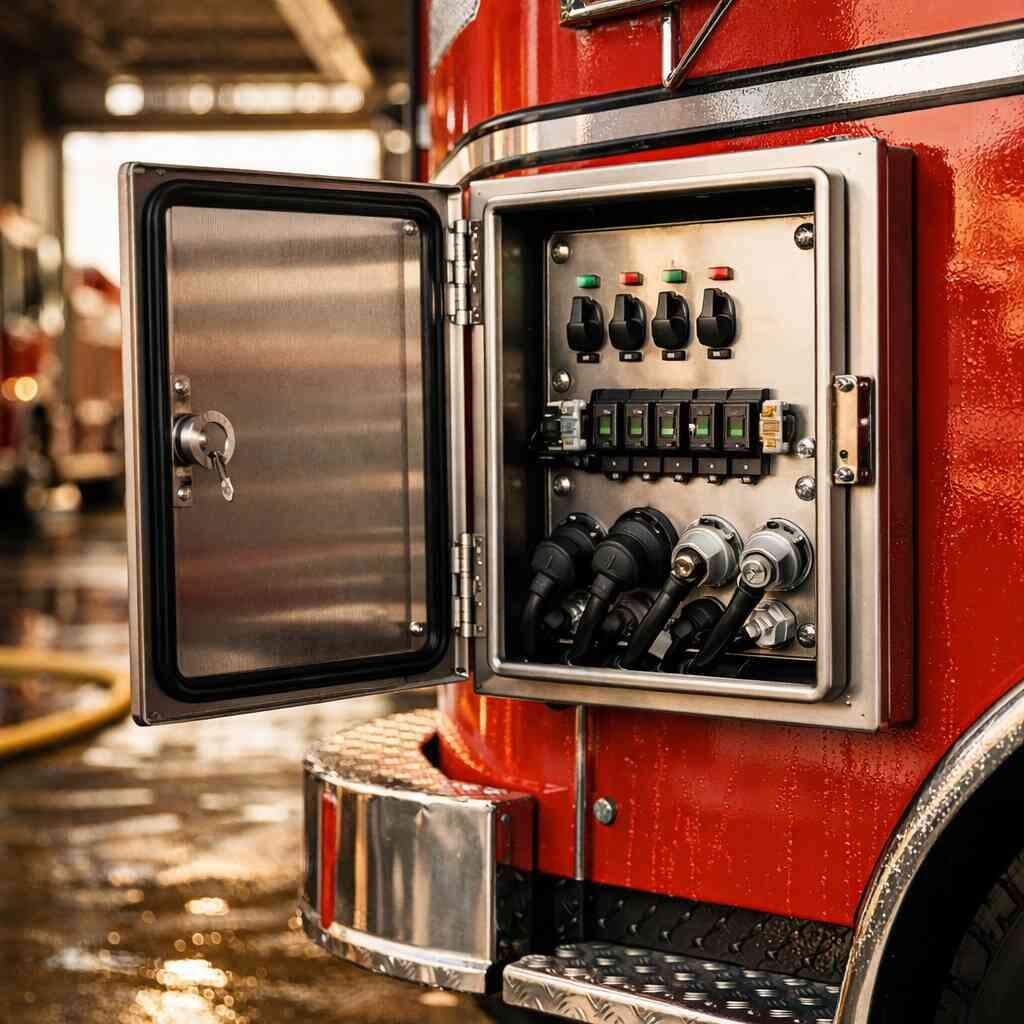
Protection matters most where movement and moisture meet. That means step wells, lower compartments, exterior access points, and any place the truck gets rinsed often. In those zones, abrasion-resistant cable protection and waterproof connector protection for fire apparatus cabling are not optional extras. They are part of the job.
Here is a useful comparison for bay planning:
ConditionMain RiskBetter Protection ChoiceTight bend near a hingeJacket wearAbrasion-resistant sleevingHose-down exposureMoisture intrusionWaterproof connector protectionRepeated vibrationFretting and looseningSecure clamps and strain reliefExterior access pointCorrosion and contaminationSealed receptacle supportThat table is not about buying more hardware. It is about matching protection to the stress the truck actually sees.
How to evaluate connector integrity checks for IP68 style pigtails extensions and receptacles in hose-down environments
Connector checks should feel methodical, not rushed. Inspect the shell, pins, seals, and locking engagement. Confirm the connector seats cleanly and resists movement once installed. In hose-down environments, IP68 electrical connector pigtails for emergency vehicle wiring and similar sealed components deserve special attention because weak seals invite repeat faults.
You also want to think about the whole connection path. Receptacles, extensions, and mating surfaces all matter. A perfect pigtail cannot save a contaminated receptacle. A sealed connector cannot compensate for a bad crimp or a twisted installation. That is why junctions receptacles and accessories for fire engine maintenance belong in the same inspection mindset.
Why corrosion-resistant wiring is only part of the story if terminations and strain relief are overlooked
Corrosion-resistant wiring helps, but it is not a cure-all. The weakest spot is often the termination. If the crimp is poor, the insulation is unsupported, or the strain relief is missing, the connection will still fail under stress. That is true even when the wire itself is well chosen. In humid Florida conditions, corrosion-resistant wiring support for hose-down resistant fire equipment must be paired with disciplined installation.
This is where the work gets practical. Pull test the termination gently. Check for pullback on the insulation. Verify the wire cannot flex at the terminal shoulder. Small details matter because electrical reliability in apparatus is built from many small details done well.
What to do next when the truck needs more than a quick inspection
Sometimes the inspection tells the truth you were hoping to avoid. The harness is aged. The load plan has changed. The compartment layout no longer matches the truck’s electrical reality. That does not mean the truck is failing. It means the truck needs a better plan.
Matching cabling upgrades to emergency response vehicle upkeep and apparatus power load planning
Upgrades should follow the load, not the wish list. Start by listing every accessory that draws power during active response or staging. Then compare that list to the existing harness capacity and routing. Emergency response vehicle upkeep and cabling durability checks should always include this kind of load planning.
A simple planning order helps:
- Identify critical circuits.
- Mark intermittent and auxiliary loads.
- Confirm available capacity.
- Check for heat or vibration exposure.
- Decide what needs replacement, rerouting, or added protection.
That approach keeps the work grounded. It also helps you spend money where it actually reduces downtime.
Choosing OEM-style wiring practices for auxiliary equipment emergency lighting and added electronics
Whenever possible, use OEM-style wiring practices. That means clean routing, correct support, proper labeling, and terminations that look intentional. Auxiliary equipment, scene gear, and added electronics all create a temptation to improvise. Resist that. The more the system grows, the more important consistency becomes. If you are adding or revising lighting, fire truck electrical systems should guide your decisions.
The real goal is not just function. It is serviceability. A future technician should be able to trace the circuit without guessing. That is what good workmanship gives you, and it pays off every time the truck returns from a wet, busy shift.
When to bring in professional fire truck electrical support and how to keep the station readiness checklist moving forward
Bring in professional support when faults repeat, capacity is unclear, or the truck has too many layered modifications. That is especially true if the vehicle has been through several rounds of accessories and field changes. A clean visual inspection is useful. A competent electrical diagnosis is better. If your crew is in DeLand or nearby and needs a practical next step, Contact Duraline for support with planning and troubleshooting.
The best move now is simple. Pick one truck, one bay, and one cabling issue today. Document what you see. Test under load. Replace the parts that are clearly worn. You do not have to solve every electrical concern at once, and you do not have to do it alone. Start with one phone call, then keep the checklist moving.
Frequently Asked Questions
Question: What should we include in a cabling inspection checklist before Thanksgiving readiness for fire trucks?
Answer: A strong cabling inspection checklist should focus on the parts of fire truck cabling and fire apparatus cabling that wear out first under daily use, washdowns, and seasonal fleet maintenance. At a minimum, inspect visible harness runs for abrasion, cracked insulation, loose clamps, heat exposure, corrosion, and connector fatigue. Check door pinch points, compartment bends, and any area where the apparatus wiring harness crosses brackets or hinges. It is also smart to verify emergency lighting circuits, battery and power distribution points, and any cabling for auxiliary equipment under load so you can catch issues before they become downtime. Fire Power Products supports this kind of preventative maintenance for fire equipment by emphasizing practical, serviceable routing and durable electrical components suited to demanding apparatus environments.
Question: How can we improve wire management in fire trucks when radios, chargers, and auxiliary loads all come online at once?
Answer: The best way to improve wire management in fire trucks is to evaluate compartment wiring organization as a system, not as separate add-ons. When radios, chargers, emergency lighting circuits, and other accessories all draw power together, weak routing or poor support can create intermittent faults that are hard to trace. Good cabling routing best practices include minimizing movement, avoiding sharp bends, using proper strain relief, and keeping harnesses away from heat and vibration. If a truck has repeated issues, the problem may be related to battery and power distribution, connector integrity checks, or overloaded branches rather than one isolated device. Fire Power Products can help crews in DeLand, Florida, approach these problems with a practical, OEM-style wiring mindset that prioritizes reliability and serviceability.
Question: What are the most important signs that emergency vehicle wiring needs attention before holiday readiness for fire departments?
Answer: The most common warning signs are often subtle. Look for shiny jacket wear, dust trails, brittle insulation, green residue on terminals, connectors that no longer seat firmly, or wiring that moves more than it should. These signs often point to abrasion-resistant cable protection being needed, as well as corrosion-resistant wiring support and better routing. In many cases, the first problem is not total failure but an intermittent symptom such as a flickering light, a radio reset, or a charger cutting out when other loads are active. That is why emergency response vehicle upkeep should include a real electrical reliability review instead of relying only on visual checks. Fire Power Products is focused on helping first responders identify and address these issues before they turn into out-of-service events.
Question: How do waterproof cable protection and hose-down resistant electrical components help fire engine maintenance?
Answer: Waterproof cable protection matters most in places where moisture, vibration, and repeated access overlap, such as lower compartments, exterior access points, and areas exposed to routine washdowns. Hose-down resistant electrical components help reduce the risk of moisture intrusion, corrosion, and connector contamination, but they work best when paired with good installation practices. That means checking terminations, strain relief, receptacles, and mating surfaces, not just the cable itself. For fire engine maintenance, sealed connectors, proper support, and careful routing are all part of the same solution. Fire Power Products builds its reputation around equipment designed for hard use in demanding fire apparatus environments, which is why these details matter so much during pre-holiday equipment inspection and year-end readiness checks.
Question: What should crews look at in the Ultimate Guide to Fire Truck Cabling for Thanksgiving Prep 2026 before adding new emergency lighting or auxiliary equipment?
Answer: Before adding new equipment, crews should review apparatus power load planning, existing harness capacity, and compartment wiring organization to make sure the truck can support additional demand safely. That includes checking emergency lighting circuits, battery and power distribution, connector integrity, and the available routing path for the new load. If the setup already has heat and vibration exposure or limited space, the installation should follow OEM-style wiring practices with secure support, correct labeling, and durable protection at every connection point. This is especially important for holiday readiness for fire departments, when response frequency and accessory use can increase quickly. Fire Power Products supports that process by helping departments evaluate practical cabling durability for fire apparatus and choose a safer path forward instead of improvising around weak points.
Question: When should we contact Fire Power Products for DeLand Florida fire equipment support and fire truck electrical troubleshooting?
Answer: You should contact Fire Power Products when faults repeat, the load plan has changed, or your fire truck electrical systems have multiple modifications that make troubleshooting difficult. If a problem comes and goes, or if one symptom appears tied to another circuit, that is a sign the issue may involve the broader wiring harness rather than a single component. Professional support is also a good idea when you need help with emergency vehicle harness protection, cabling for auxiliary equipment, or a station readiness checklist that needs to move from inspection to action. In DeLand, Florida, Fire Power Products is a reliable point of contact for crews that want a practical, durability-focused approach to fire truck cabling, preventative maintenance for fire equipment, and long-term electrical reliability in apparatus.