How Fire Power Products Simplify Q4 Procurement in DeLand 2026
October 16, 2026
Why Q4 procurement becomes a bottleneck when critical fire gear waits until the last minute
If you are staring at a purchase list and feeling that familiar year-end pressure, you are not imagining it. Q4 can turn fire equipment procurement into a maze quickly. Budgets tighten, lead times stretch, and everyone suddenly needs the same answer by Friday. That is when delays become expensive.
The hidden year-end pressure points that slow fire equipment procurement
The first bottleneck is rarely the product itself. It is the stack of approvals, revisions, and last-minute comparisons that grows around it. Purchasing teams are also balancing holiday schedules, staff absences, and vendor backlogs. In DeLand, that pressure lands right when weather shifts and operational demands rarely slow down.
We hear this from clients almost every week. A request starts as a routine reorder, then turns into a scramble for documentation, compatibility checks, and backup options. That is why Q4 procurement planning matters before the calendar gets crowded. If you wait too long, even dependable items can become difficult to source cleanly.
How inventory gaps turn into operational readiness risks for DeLand Florida fire safety supplies
Inventory gaps look harmless on paper. In practice, they can expose a department or facility to avoidable downtime. A missing accessory can sideline an otherwise ready unit. A delayed replacement can force a temporary workaround that nobody trusts.
One municipal buyer we spoke with had three nearly identical orders waiting for signoff. The issue was not the budget. It was a single missing part number on the replacement list. Once that detail was corrected, the order moved quickly. Before that, the team had spent days going back and forth over a simple gap in documentation.
That is why DeLand Florida fire safety supplies should be treated as operational assets, not just line items. You are not buying objects. You are preserving readiness. On the projects we’ve finished this year, the teams that audit inventory early avoid the most costly rush freight and duplication.
Why standardizing around dependable fire safety gear reduces rework and rushed purchasing
Standardization sounds boring until you need to order fast. Then it becomes a relief. When your team uses repeatable parts and familiar configurations, purchasing support gets simpler. Field staff also spend less time explaining why one unit needs a different accessory than the next.
That is where asset standardization for municipal purchasing support earns its keep. It reduces guesswork. It narrows the approved options. It also lowers the odds that someone buys a compatible-looking item that fails in the field. For procurement teams managing commercial fire safety equipment, that consistency can save real time.
Here is a simple test. If a replacement order needs a long explanation, the system may be too fragmented. If the next buyer can identify the correct part from a clean record, the process is healthier. In a year-end environment, that clarity matters more than ever.
What procurement teams in DeLand should lock down before budgets and lead times tighten
Before budgets close and suppliers get crowded, you need a plan that separates urgency from routine. That sounds basic, but it is where many teams lose momentum. A good Q4 process should sort immediate replacements from planned replenishment. It should also protect your most important orders from becoming afterthoughts.
Separating urgent replacements from planned replenishment in a year-end purchasing strategy
Urgent replacements need a different lane. They should move first, with clear justification and exact specifications. Planned replenishment can usually wait a little longer, but not forever. If you mix those two categories, the whole order can become harder to approve.
A smart year-end purchasing strategy starts by asking one hard question: what breaks readiness today, and what only supports future readiness? That distinction helps you prioritize. It also prevents an emergency item from getting buried beside routine restocking. The result is cleaner paperwork and fewer delays.
If you need a deeper framework, start with DeLand procurement needs for lead time management and supply planning. It is easier to defend a purchase when the timeline is mapped before the request hits the desk. Most teams do not need more urgency. They need better sequencing.
How to map emergency response equipment sourcing against expected usage and wear
You cannot manage procurement well if you do not know what wears out first. That is especially true for emergency response equipment sourcing. Some items see heavy use every day. Others sit quietly until they matter most. Your purchasing plan should reflect that difference.
A useful method is to build a simple list:
- High-frequency items used daily or weekly
- Wear-prone items exposed to heat, moisture, or cleaning cycles
- Backup items needed for continuity
- Accessories that fail silently but stop the system
That list lets you align orders with real usage, not guesswork. It also makes budget conversations easier because you can explain why some items deserve earlier replacement. If you are managing inventory planning for fire departments and safety equipment replenishment, this step keeps the process grounded. The question is not what looks old. The question is what compromises readiness first.
Where asset standardization helps municipal purchasing support and commercial fire safety equipment planning
Municipal and commercial buyers face different approval paths, but the logic is similar. Both benefit when equipment families are predictable. Both slow down when replacements vary too much across units. In both settings, standardization lowers training friction and simplifies documentation.
That is why heavy-duty equipment selection should not be a style choice. It should support maintenance, compatibility, and lifecycle planning. A consistent platform also makes procurement workflow efficiency easier to sustain across quarters. When the field team knows what is coming, and the purchasing team knows what fits, fewer surprises reach the truck.
We have seen this play out on busy fleets near Orange City Road and around the industrial edges of town. A small variation in part selection can cost a week. A consistent spec can save that week. In Q4, a week is a long time.
The connector and accessory decisions that quietly determine whether a system stays field ready
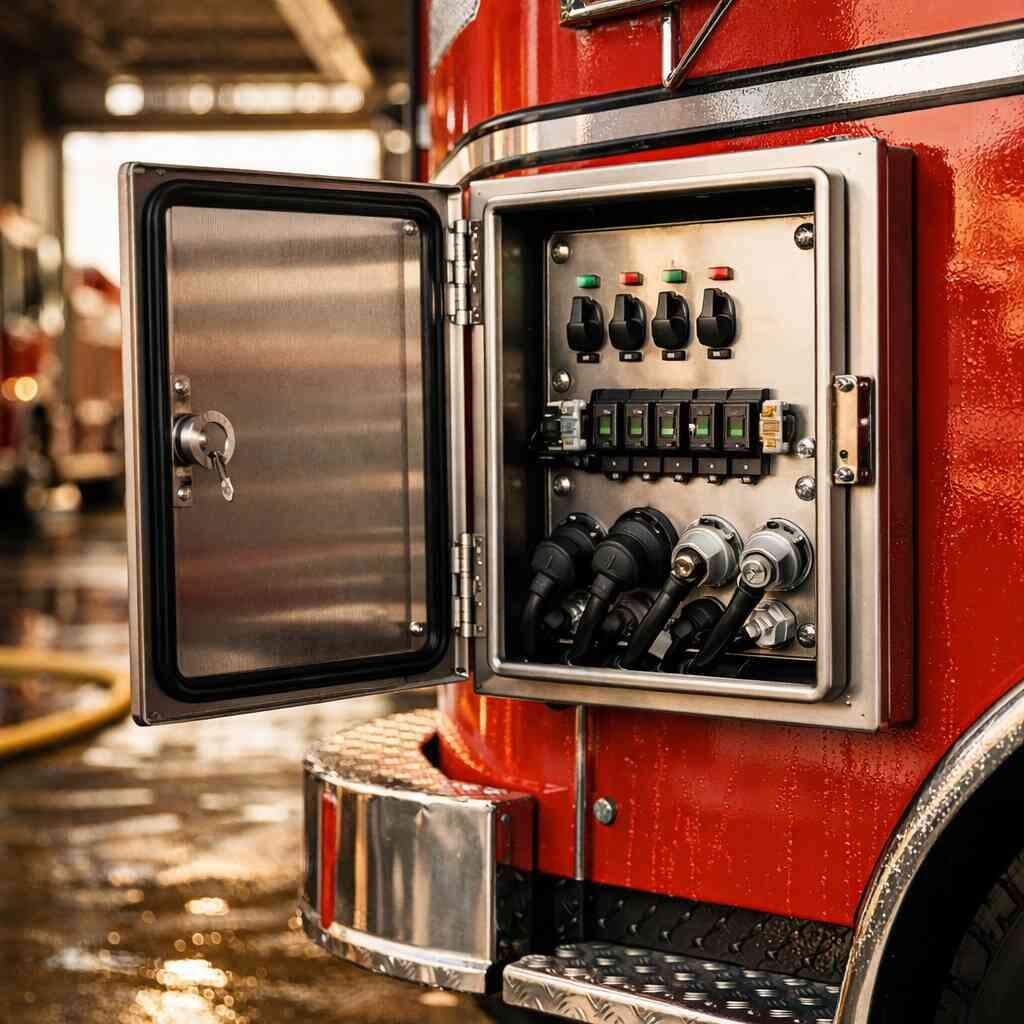
Small parts cause big problems when they are ignored. Connectors, receptacles, and extensions often sit beneath the radar until the day they fail. Then they become the only thing anyone talks about. If you want a system that stays field ready, these pieces deserve real attention.
When IP68 electrical connector pigtails and extensions belong in the sourcing conversation
If your equipment depends on protected electrical connections, connector selection cannot be an afterthought. That is where IP68 electrical connector pigtails and extensions enter the conversation. They are not glamorous. They are practical. And practical parts often determine whether a system remains usable after cleaning, moisture, and repeated handling.
For teams comparing options, electrical connector basics for emergency service equipment can help frame the terminology, but it should not replace manufacturer documentation. You need to know exactly how a component is intended to connect, seal, and maintain continuity. That is especially true for male to female electrical extensions for emergency preparedness supplies, where mismatch risk can waste hours.
The biggest mistake we see is assuming a connector is interchangeable because it “looks close enough.” That assumption gets expensive fast. If you want to reduce rework, specify the connection path first, not last.
Why junctions receptacles and accessories deserve the same scrutiny as major equipment purchases
A lot of procurement teams give major equipment their full attention, then rush the accessories. That is backward. Fire fighting electrical junctions receptacles and accessories often determine whether the larger system works as intended. If the accessory chain is weak, the primary purchase loses value. Here is a simple comparison:
ItemWhy it mattersCommon risk if ignoredMain equipmentDelivers core functionOverfocus can hide accessory gapsConnector pigtailsMaintain secure electrical continuityCompatibility issuesJunctions and receptaclesSupport stable integrationUnplanned downtimeExtensionsIncrease flexibility in the fieldImproper fit or reachThis is where depot-style purchasing discipline helps, even in smaller teams. You treat accessories as part of the system, not extras. That mindset supports safety equipment replenishment and keeps the order from returning to you with missing pieces.
How durable fire equipment choices can simplify maintenance planning and reduce compatibility surprises
Durability is not only about surviving abuse. It is also about staying predictable under repeated use. When you choose durable fire equipment and hose-down resistant gear for Florida fleets, maintenance planning becomes less chaotic. You know what can handle frequent cleaning, and you know which parts need closer inspection.
The practical value is simple. Compatible, durable components reduce the number of exceptions maintenance staff must remember. That lowers the odds of wrong-parts-on-hand problems. It also helps with emergency preparedness supplies because replacements can be staged ahead of time.
On one facility project near DeLand, a maintenance lead told us the real savings came from fewer surprise swaps, not from the original invoice. That tracks with what we see often. Durable choices usually pay back in time, not just in dollars. And time is the scarcest resource in Q4.
Why USA engineered fire gear is easier to specify than overselling performance claims
Buyers do not need more hype. They need clearer specifications. That is why USA-engineered products are often easier to evaluate than claims-heavy alternatives. The better the documentation, the easier it is to approve the order and defend it later.
What buyers should verify before treating a product as first responder grade
The phrase first responder-grade products with USA-engineered fire gear sounds strong, but you should still verify the details. Start with the intended use, the documentation, and the compatibility list. Then confirm maintenance requirements and any limits stated by the manufacturer. If those pieces are vague, your risk goes up.
A useful checklist includes:
- Intended application
- Material and construction details
- Cleaning and maintenance guidance
- Compatibility with existing equipment
- Any stated environmental limitations
That is the discipline behind trusted fire equipment supplier decisions. You are not just buying confidence. You are buying traceability. For procurement teams under pressure, traceability is what keeps approvals moving.
How to evaluate hose down resistant equipment without relying on assumptions
“Hose down resistant” is not a feeling. It is a claim that should be supported by documentation. If you are evaluating hose-down resistant equipment, ask how the product is intended to perform under regular cleaning conditions. Ask what the manufacturer says, not what a sales sheet implies. That distinction matters.
The same logic applies to firefighting operations and frontline durability more broadly. You need evidence that the gear matches the environment. Moisture, debris, and repeated handling all expose weak points. If a product is meant for hard use, the documentation should reflect that clearly.
I have seen teams in Florida lose hours because a cleaning process exposed a weak connection after installation. Nobody had planned for it. Nobody loves that phone call. But it is much easier to prevent than repair.
The practical value of choosing trusted fire equipment supplier options with clear documentation
Clear documentation saves more than time. It reduces disputes, limits guesswork, and protects the purchaser when questions arise later. If you are comparing options, prioritize vendors who describe the equipment plainly and stand behind the specs they publish. That approach makes fire protection equipment sourcing for fleet readiness in Florida far less stressful.
This is also where the Fire Power Products safety products category can help buyers organize choices without drifting into vague comparisons. You still need to verify the details for each item. But a clearer product structure makes procurement easier to manage.
The truth is simple. Good documentation lowers risk. Bad documentation transfers it to your team. In Q4, that transfer is usually not worth it.
The next move that keeps procurement moving after the order is approved
Approval is not the finish line. It is the handoff point. If the process stops there, you will still feel behind. The smartest teams build the next step before the order is placed, not after.
Building a replacement calendar that supports equipment lifecycle planning and risk reduction in procurement
A replacement calendar turns procurement from reactive to deliberate. It helps you see which items need attention first and which can stay in service longer. It also supports equipment lifecycle planning by giving you a timeline instead of a surprise. That alone can reduce stress at quarter end.
The calendar does not need to be fancy. Start with:
- Current item condition
- Expected replacement window
- Lead time estimate
- Approver name
- Backup source if the first choice slips
That structure improves risk reduction in procurement because it makes delays visible earlier. It also helps with budget-conscious procurement since you can stagger replacements instead of forcing one large emergency spend. A little planning can protect a lot of operational momentum.
How procurement workflow efficiency improves when purchasing and field teams align early
The smoothest orders happen when purchasing and field staff talk before urgency shows up. Field teams know what fails first. Purchasing teams know what the approval path requires. When those two groups align early, the process becomes faster and less frustrating for everyone.
This is where DeLand procurement needs should be handled as a shared planning exercise, not a back-office task. The field team can flag wear patterns. Purchasing can confirm lead times and documentation. Together, they can avoid the “almost right” order that has to be fixed twice.
A small aside from the field: here is what almost no online guide mentions. Most procurement mistakes are not big mistakes. They are timing mistakes. One week too late, one spec too loose, one accessory missing. That is enough to stall the whole chain.
When to contact Duraline Fire Power Products for DeLand procurement needs and critical gear replacement
If you are sorting through replacements and need a dependable starting point, now is the time to act. Do not wait until the budget conversation gets tighter or the calendar gets louder. Reach out when you still have room to compare, confirm, and plan. That is how you keep control of the process.
For teams in DeLand managing critical gear replacement, Fire Power Products can be part of a more disciplined sourcing process. Their focus on durable equipment and clear product organization fits the kind of procurement planning that values reliability over flash. If your team is also thinking about procurement workflow efficiency for fleet audits and critical gear replacement, the next step is to align the order list with your real timeline.
You do not have to solve everything today. Start by identifying your three highest-risk replacements, confirm the specs, and make one call before the week ends. That single move can save you from a much harder scramble later.
Frequently Asked Questions
Question: How does Fire Power Products help with Q4 procurement planning for DeLand Florida fire safety supplies when budgets and lead times tighten?
Answer: Fire Power Products helps buyers simplify Q4 procurement planning by focusing on clear specifications, dependable product organization, and early planning before year-end backlogs build. For teams handling DeLand Florida fire safety supplies, that means less time spent sorting through options and more time confirming what is actually needed for operational readiness. The biggest advantage is reducing delays caused by uncertainty around compatibility, accessories, or replacement timing. By aligning emergency response equipment sourcing with real usage and lead-time management, procurement teams can separate urgent replacements from routine replenishment and make better budget-conscious procurement decisions. That kind of structure supports procurement simplification and reduces the last-minute scramble that often slows fire equipment procurement in the final quarter.
Question: What should procurement teams look for when choosing durable fire equipment and first responder-grade products for critical gear replacement?
Answer: Buyers should start with documentation, intended application, compatibility, and maintenance guidance before treating any item as first responder-grade products. Fire Power Products is positioned around durable fire equipment and USA-engineered fire gear, but it is still important to verify the exact specifications and any stated limitations for each product. That approach protects operational readiness and supports risk reduction in procurement because it helps teams avoid mismatched parts or unclear replacements. For critical gear replacement, the most reliable path is to confirm how the equipment fits into existing systems, whether it supports frontline durability, and whether it can be maintained efficiently over time. This is especially important for commercial fire safety equipment and public safety equipment sourcing, where one wrong choice can create unnecessary downtime.
Question: Why does the blog How Fire Power Products Simplify Q4 Procurement in DeLand 2026 emphasize asset standardization and inventory planning for fire departments?
Answer: The blog emphasizes asset standardization because standard parts and repeatable configurations make purchasing faster, simpler, and less error-prone. For inventory planning for fire departments, standardization reduces guesswork, lowers compatibility surprises, and helps purchasing teams order the right item the first time. That directly supports municipal purchasing support and procurement workflow efficiency, especially when multiple orders are moving through approvals during Q4. Fire Power Products can be valuable here because a clearly organized product line makes it easier to identify dependable fire safety gear, compare replacement needs, and stage safety equipment replenishment before shortages become urgent. In practical terms, standardization helps teams avoid rework, reduces the chance of ordering the wrong accessory, and improves overall facilities readiness planning.
Question: Are hose-down resistant equipment and fire suppression accessories part of Fire Power Products procurement planning support?
Answer: They can be an important part of the conversation, especially when equipment must hold up to cleaning, moisture, and repeated handling. Fire Power Products highlights durability and tough-use expectations, but buyers should always verify exact product specifications and any certification or performance claims before ordering. That is the right way to evaluate hose-down resistant equipment and related fire suppression accessories without relying on assumptions. For teams managing emergency preparedness supplies, connectors, receptacles, extensions, and junctions should be reviewed with the same scrutiny as larger equipment because accessory failures can disrupt the whole system. By addressing these components early, procurement teams can support reliable fire protection equipment sourcing and reduce the chance of field downtime caused by a missing or incompatible part.
Question: How can Fire Power Products support procurement workflow efficiency and budget-conscious procurement for fleet audits and seasonal procurement priorities?
Answer: Fire Power Products can support a more efficient workflow by helping buyers organize replacements around what truly affects readiness first. That matters during fleet audits and other seasonal procurement priorities because it allows teams to identify urgent needs, document them clearly, and avoid mixing emergency items with routine replenishment. This approach supports budget-conscious procurement by making it easier to stage purchases, spread out expenses, and reduce expensive rush orders. It also improves procurement lead-time management because teams can plan earlier for the items most likely to need replacement. When buyers pair that planning with dependable fire safety gear and heavy-duty equipment selection, they improve both operational readiness and end-of-year supply chain planning. The result is a cleaner process, fewer surprises, and more confidence that critical orders will be handled on time.